
Side Sewer · Water · Storm Drain
We dig, lay and connect side sewers, water lines and storm drains for homes, ADUs and small commercial builds across Seattle and King County. Permits and inspections included.
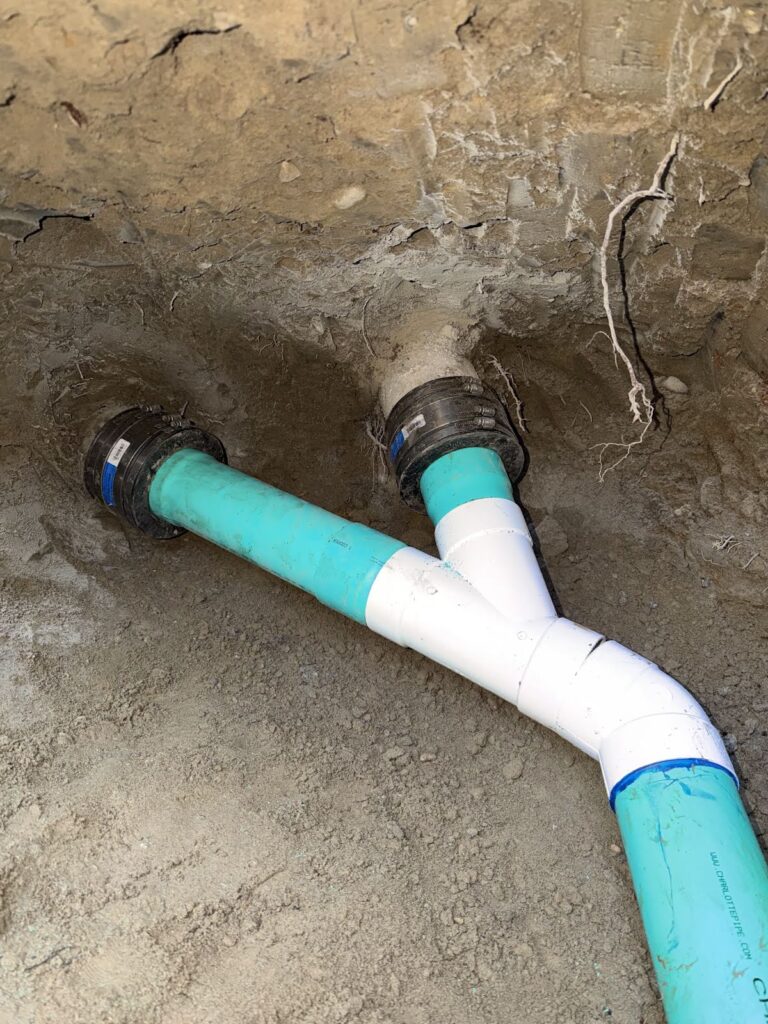
Most jobs are one of these, and plenty are a mix. Not sure what your project needs? Send us the plans or a few photos and we’ll tell you.
A new side sewer from the house to the city main, or a replacement for an old line that’s cracked, full of roots or sagging. We trench, bed and lay the pipe, set the cleanouts and get it inspected before anything is covered.
Your private water line runs from the meter to the house. We dig it and lay it along the shortest route the city allows (Seattle doesn’t let it run under the building), and we coordinate with SPU on the tap and meter side.
Footing drains, downspout lines, yard drains and the service drain that carries it all off the lot. In a city that gets this much rain, where the water goes matters as much as the sewer.
Seattle City Light and Puget Sound Energy run their own lines, but somebody has to open the trench to their spec. We dig it, keep it clean and safe, and close it up once their crews are done.
Before an old house comes down, its sewer connection has to be capped under a side sewer permit. We do the capping and get it signed off, so the demolition schedule doesn’t slip because of one pipe.
Backups, root intrusion, a collapsed section under the driveway. We find the problem, open only as much ground as we need to, fix it properly and put the surface back the way it was.
Utility work in Seattle goes through more than one city department. Here’s what usually applies to a connection job, and what we take off your plate.
SDCI requires a permit for new side sewers, repairs, capping and removals. On new construction it’s issued only after the building permit, so we plan the timing together with your builder.
Anything in the street or close to the city’s main has to be done by a Registered Side Sewer Contractor. We’ll tell you at the estimate whether your job falls into that category and how it’s handled.
An SDCI inspector has to see the pipe uncovered and properly bedded before the trench is closed. We book the inspection, meet the inspector on site and prepare the as-built drawing the city needs for final.
Washington law requires a locate request at least two business days before any digging. We call it in on every job and dig carefully around everything that gets marked.
When a trench crosses the sidewalk or the street, SDOT permits and restoration standards come into play. We cut, patch and restore the surface to the city’s spec, not to “close enough.”
For a new water service, SPU first confirms the main can serve your lot through a Water Availability Certificate. We help get that paperwork in early so it doesn’t hold up the tap later.
Four steps, and you know where things stand at each one.
We walk the route, check the depth of the main, slopes and anything in the way, then give you a written price.
We pull the permits, request locates and line up inspection dates, so the crew isn’t standing around waiting.
Trench, bedding, pipe, cleanouts. The trench stays open until the inspector signs off, not a minute less.
We compact the backfill, restore the driveway, lawn or street, and hand you the as-built for your records.
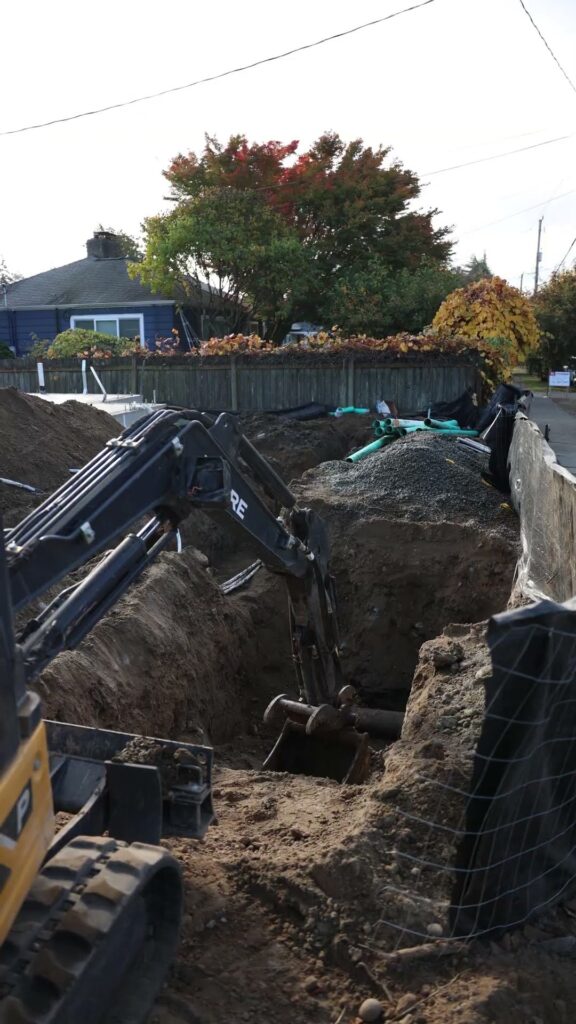
Real jobs from our crew: trenching, sewer and drain lines, and service stubs ready for inspection.
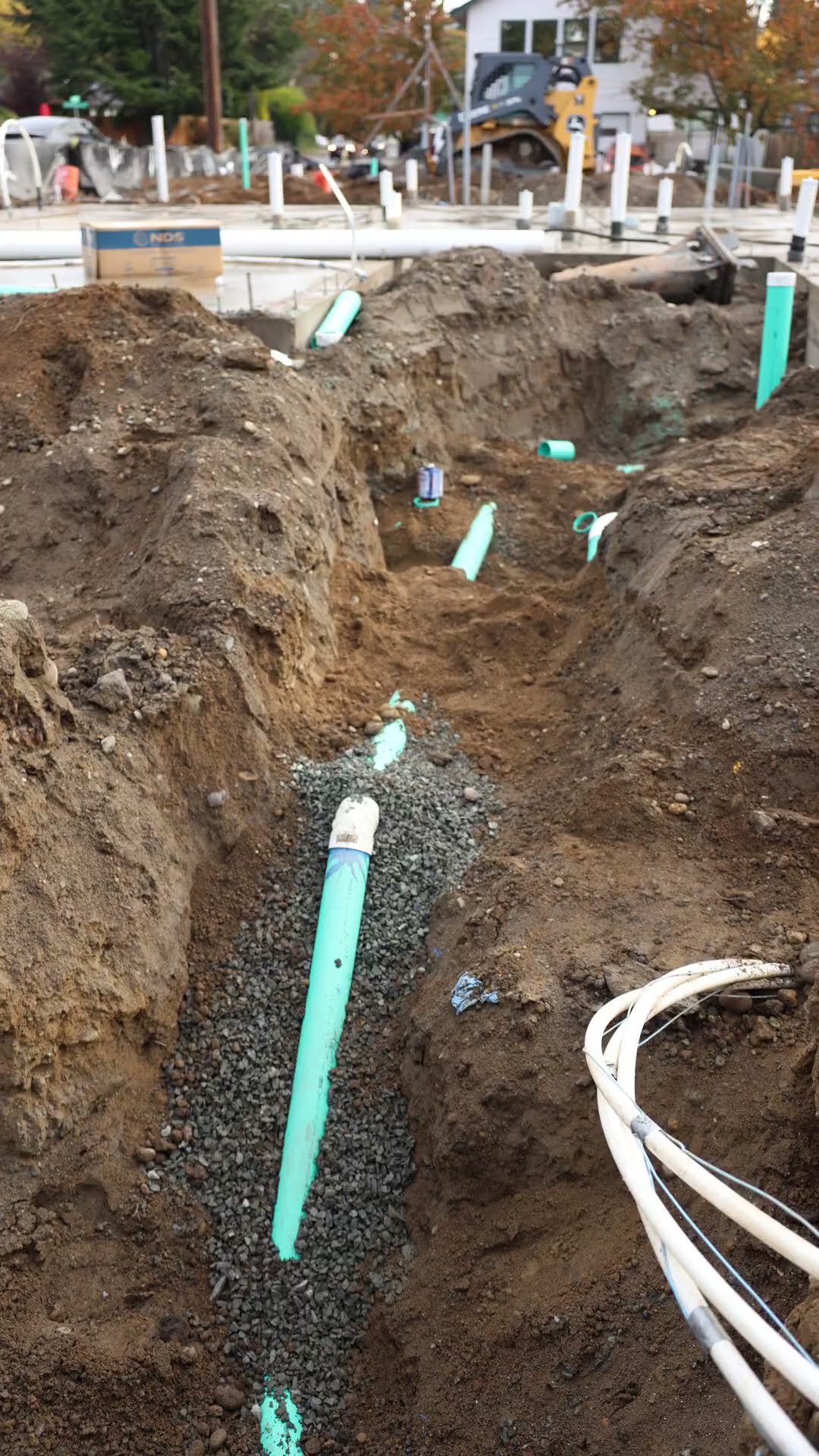
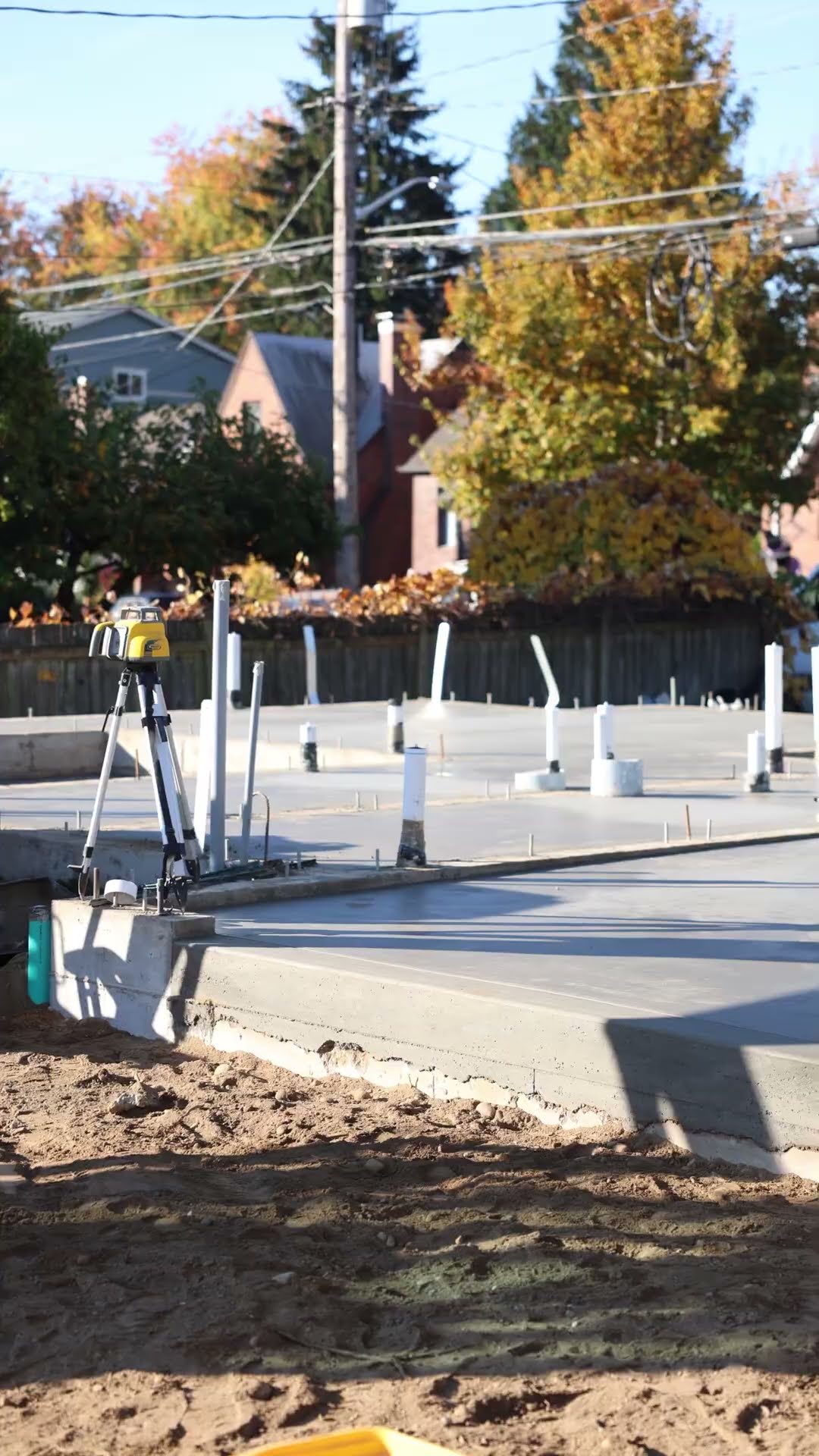
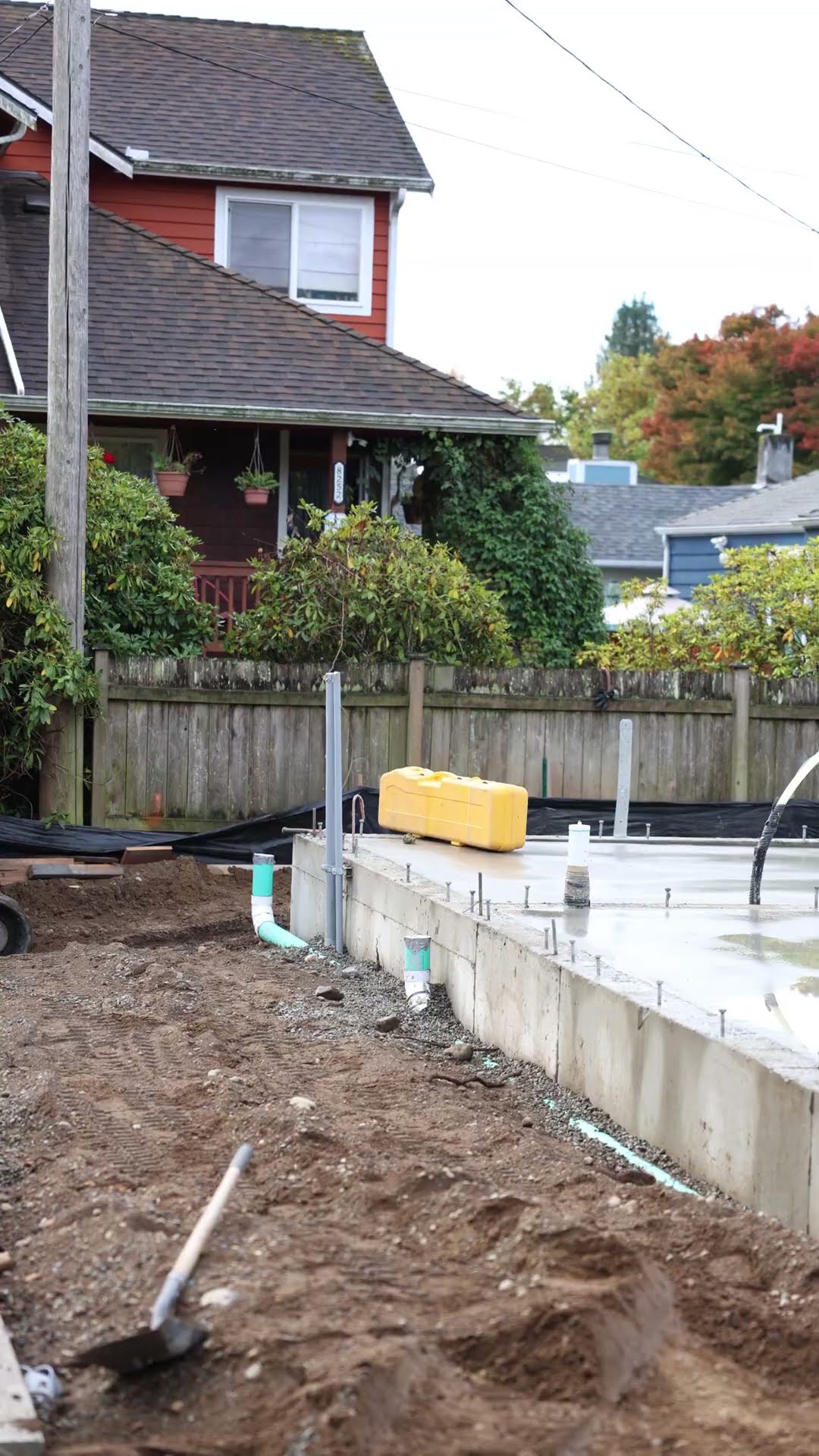
Most delays on utility work don’t come from the digging. They come from a permit nobody pulled, an inspection that got missed, or a trench left open over a rainy weekend. We plan around exactly those things.
Seattle ground doesn’t make it easy, either. Wet clay, hard glacial till and steep lots are normal here, and plenty of older homes still sit on clay side sewers that are past their prime. We know what we’re likely to find before the bucket goes in.
The questions we hear most often. If yours isn’t here, just call.
Yes. SDCI requires a side sewer permit for any new connection, and also for repairs, capping and removal of an existing line. On new construction the side sewer permit is issued after the building permit. We apply for it as part of the job.
In Seattle the side sewer belongs to the property it serves, all the way out to the public main. So repairs and replacement are the owner’s responsibility, including the section under the sidewalk or street.
For a typical house, the work on site is usually a matter of days, not weeks. What adds time is permitting and inspection scheduling, which is why we sort those out before the crew shows up. You’ll get a realistic timeline with your estimate.
Yes. Many older Seattle homes still have clay side sewers, and over the decades they crack, separate at the joints or fill up with roots. We replace them with modern pipe under permit and only open as much ground as the job actually needs.
The tap at the main and the meter go through Seattle Public Utilities. We coordinate with SPU and build your private water line from the meter to the house along the shortest allowed route. City rules don’t let that line run under the building.
Yes, restoration is part of our quote, whether it’s asphalt, concrete, gravel or landscaping. If the trench is in the street or sidewalk, we restore it to SDOT standards.
Seattle, Bellevue, Redmond, Kirkland, Renton, Tacoma, Lynnwood and Everett, plus the communities in between. If your project is outside that area, call us anyway and ask.
Send us the address and a few lines about the project. We’ll come out, look at the route and give you a straight answer on cost and timing.