
Foundations · Basements · Grading · Trenching
Foundation digs, basements, grading and trenching on real Seattle lots: steep, tight, wet and full of glacial till. An excavation contractor in Seattle that cuts accurately and keeps walls safe.
Most of our excavation work in Seattle falls into one of these. Bigger projects usually need several of them.
Footing and foundation digs cut to the plan’s elevations, with clean, firm bottoms ready for the foundation crew.
Full and partial basements, crawl space digs and basement lowering, with shoring or sloping planned around the soil and the neighbors.
Cut and fill to the grading plan: building pads, driveways and yard grades set so water drains away from the house.
Trenches for sewer, water and storm lines, power and gas. Anything 4 feet or deeper gets a protective system, as Washington requires.
Excavated soil hauled off or reused on site, and structural fill or gravel brought in and compacted where the plan calls for it.
Footing drains, yard drainage and excavation for retaining walls, so water is managed from the start instead of after it causes trouble.
On a simple job most of these won’t matter. On a hillside or a big dig, they decide what’s possible and when. Sources: SDCI grading permits and Washington L&I trench safety.
A separate grading permit is generally needed above 500 cubic yards or for larger grade changes. Grading that’s part of your building permit usually doesn’t need its own.
In steep slope and landslide-prone areas, as little as 25 cubic yards of earthwork can require a permit, and a geotechnical engineer is usually involved.
Seattle’s rainy season runs November 1 to March 31. Grading in landslide-prone areas during that time needs an approved grading season extension.
Washington requires cave-in protection for trenches 4 feet or deeper: shoring, shielding or proper sloping, plus a safe way out within reach.
A locate request at least two business days before digging. Every job, every time, and we dig carefully around whatever gets marked.
Silt fence, a stabilized construction entrance and inlet protection keep mud off the street and out of the storm drains.
Four steps from reviewing your plans to a hole that’s ready for inspection.
We go through your plans and soils report, check access and decide where the spoils will go.
811 called in, silt fence and construction entrance installed before the first bucket goes in.
Cut to elevations, depths checked as we go, walls and neighboring property protected.
A clean, firm bottom ready for the inspector and the foundation crew, with spoils already gone.
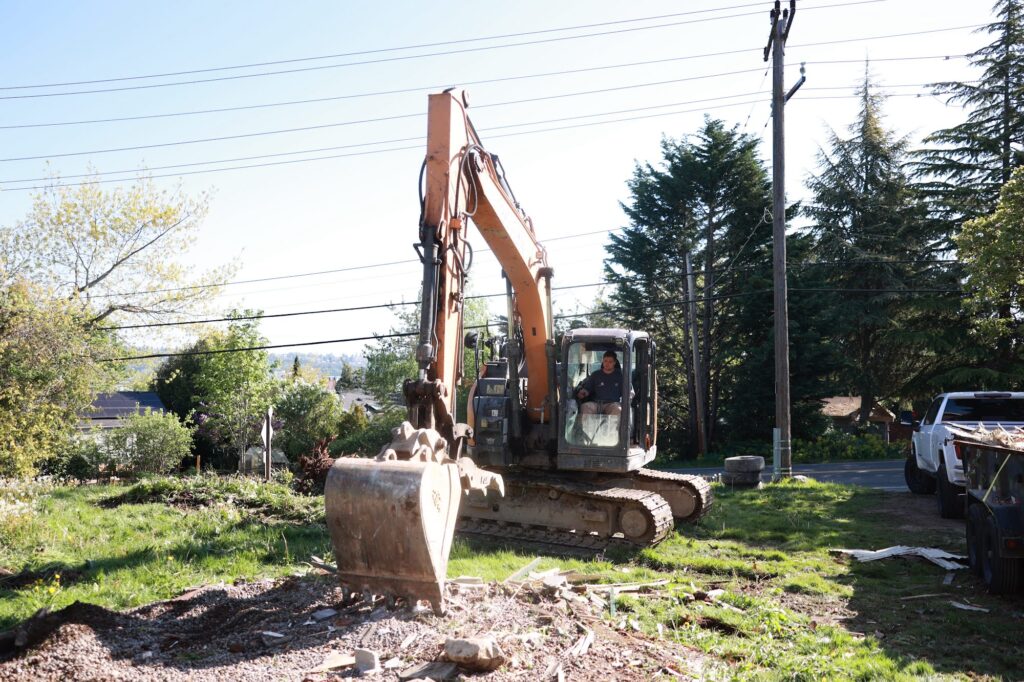
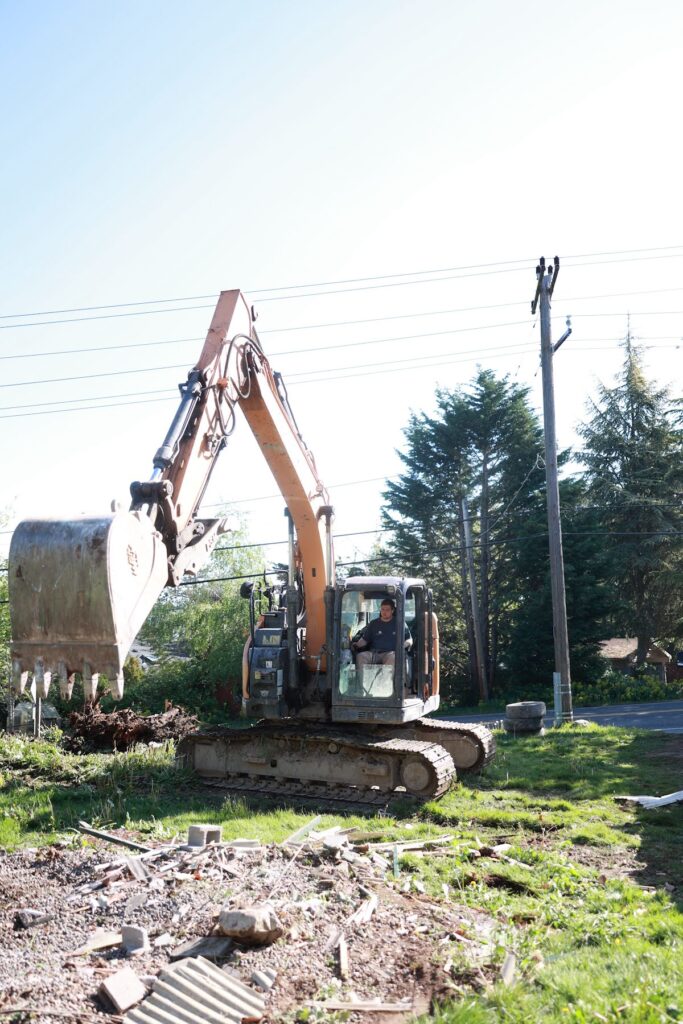
Real job sites from our crew: digging, building pads and final grade, ready for the next trade.
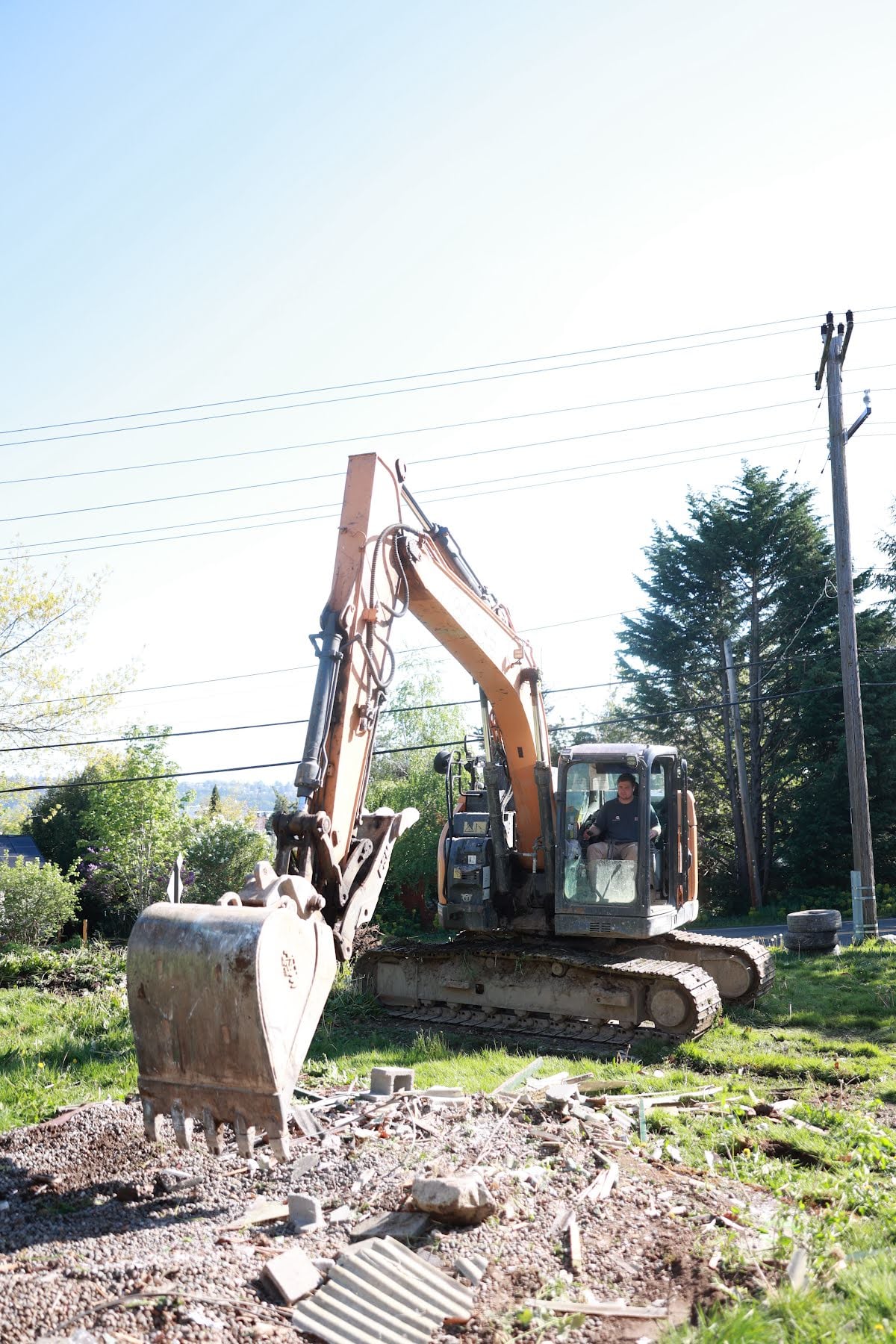
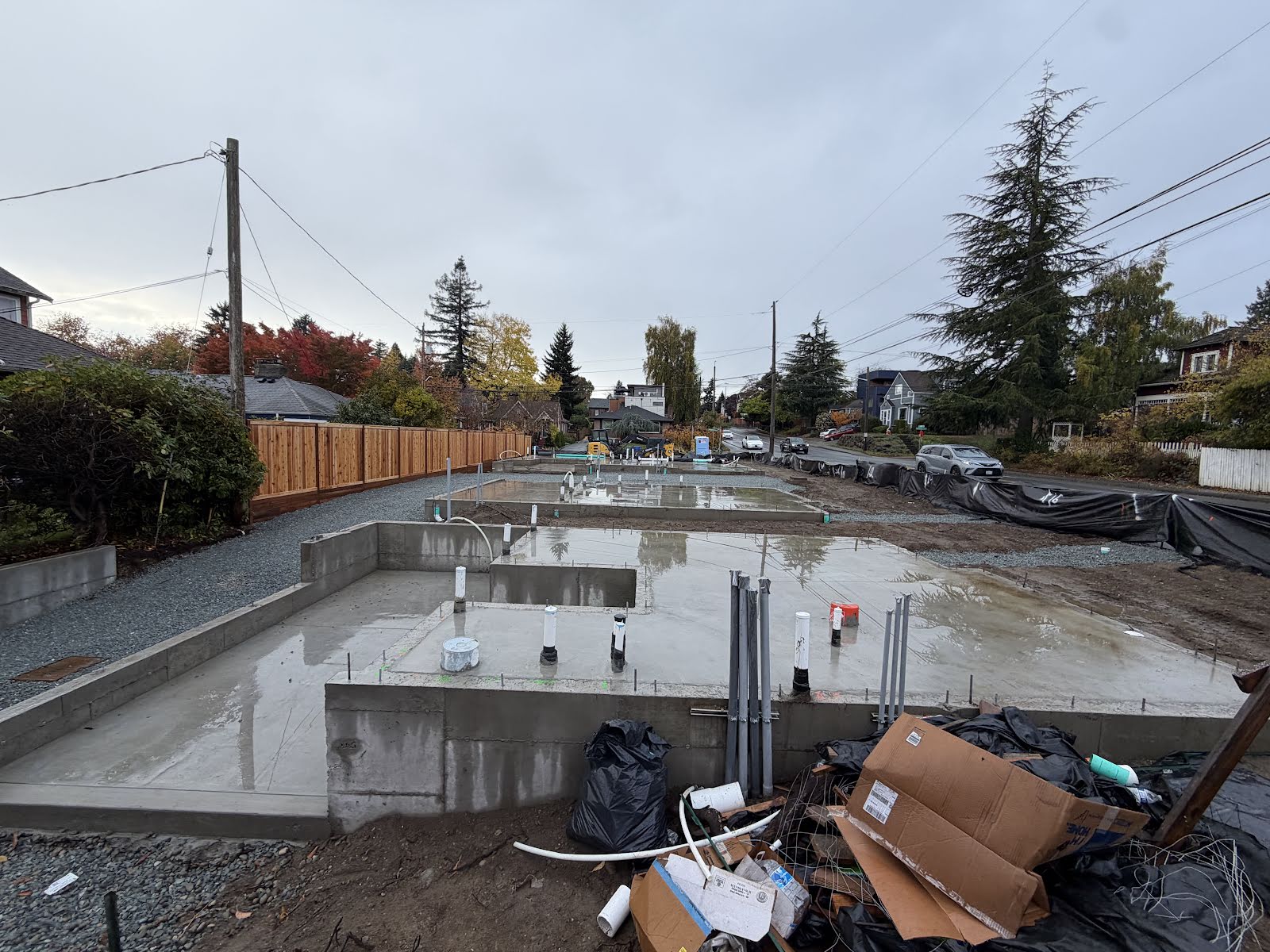
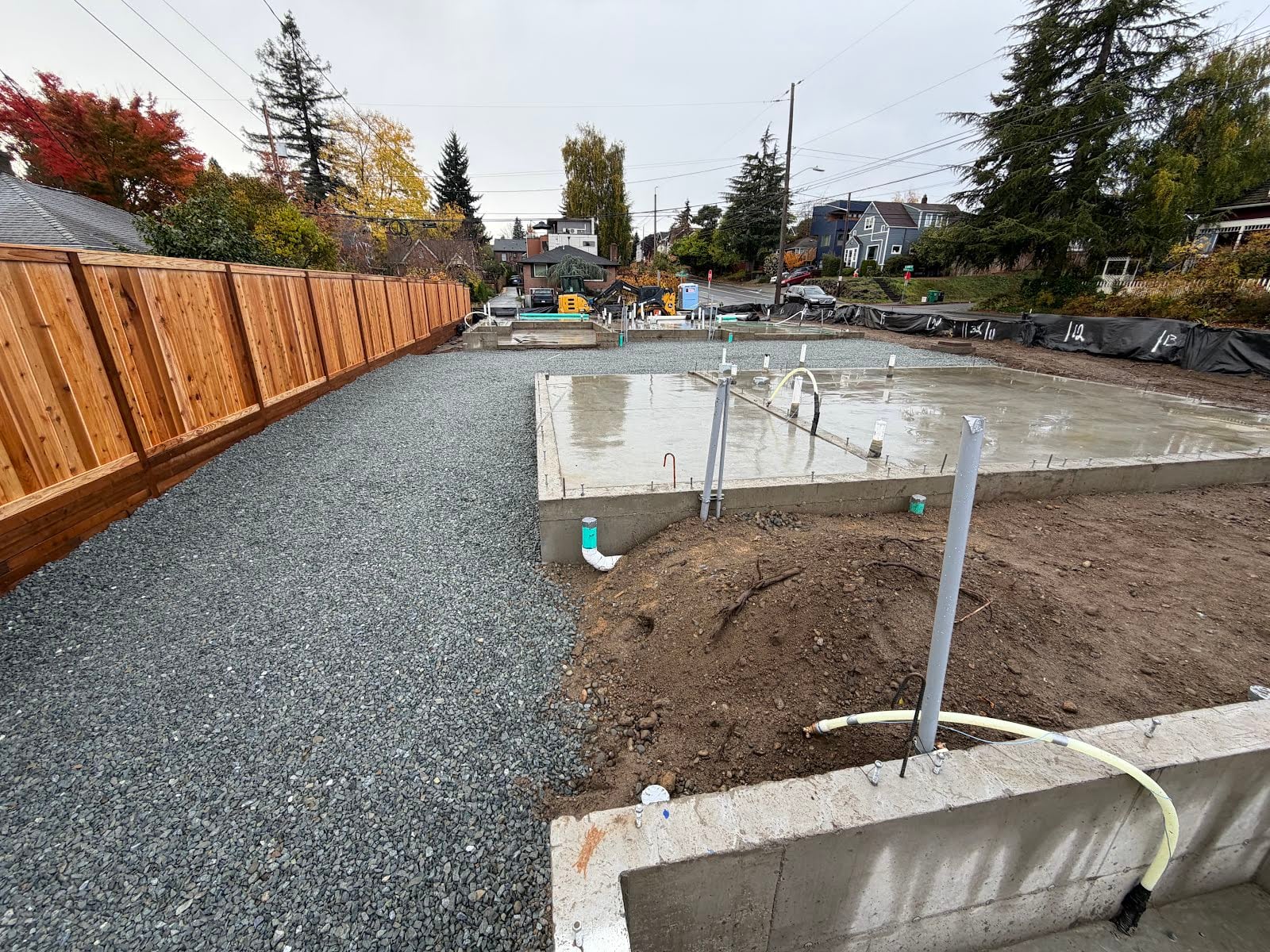
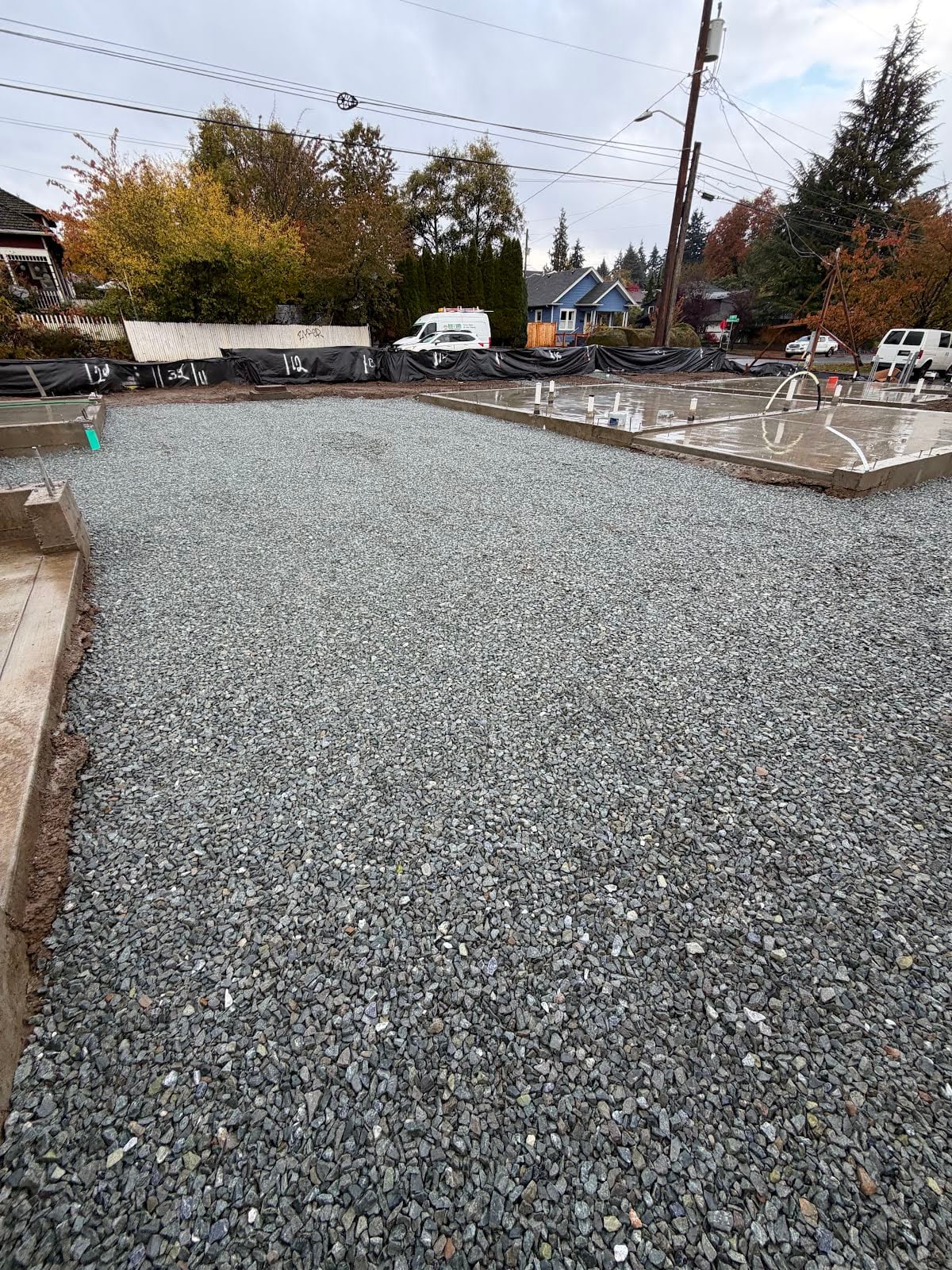
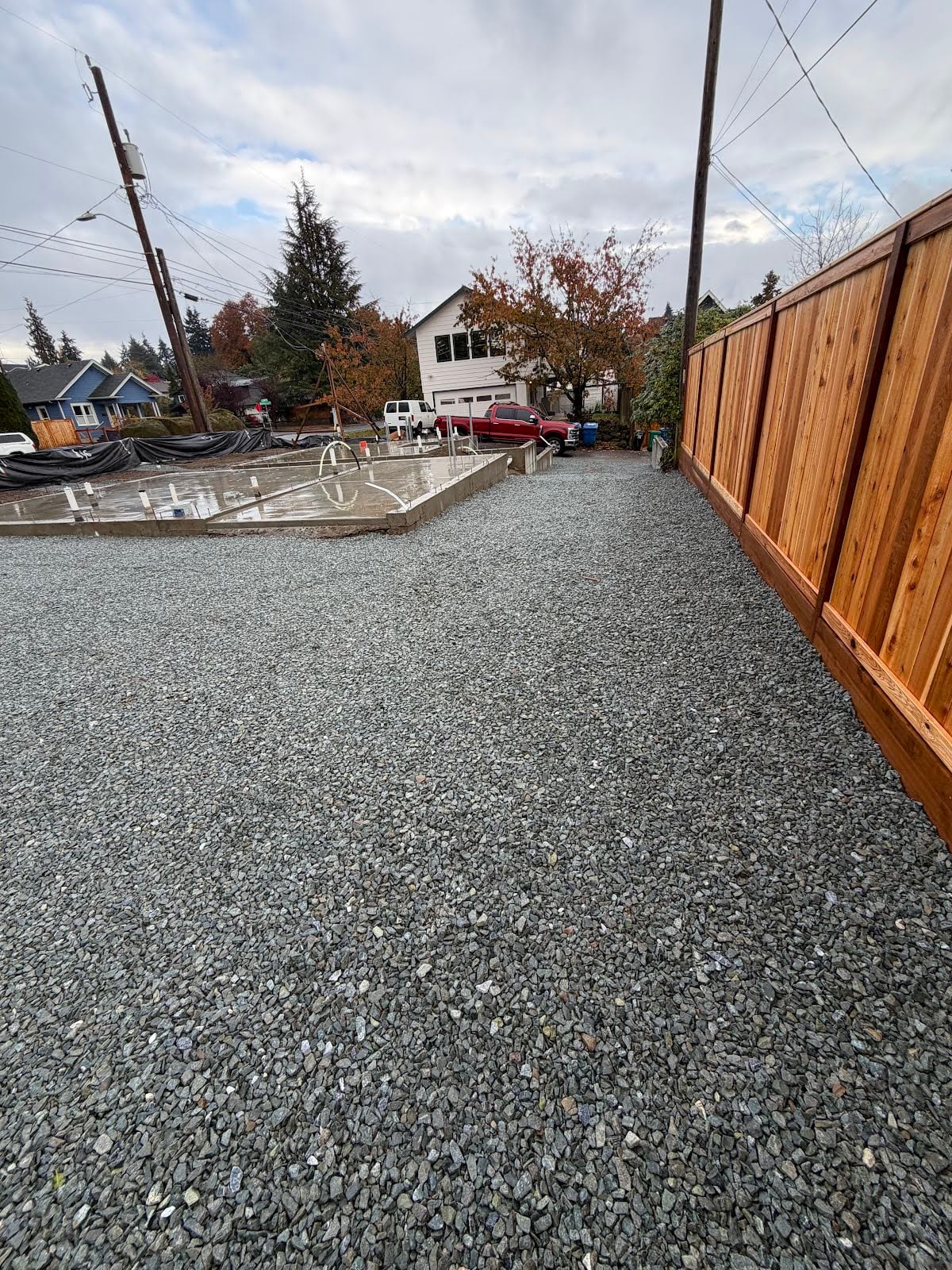
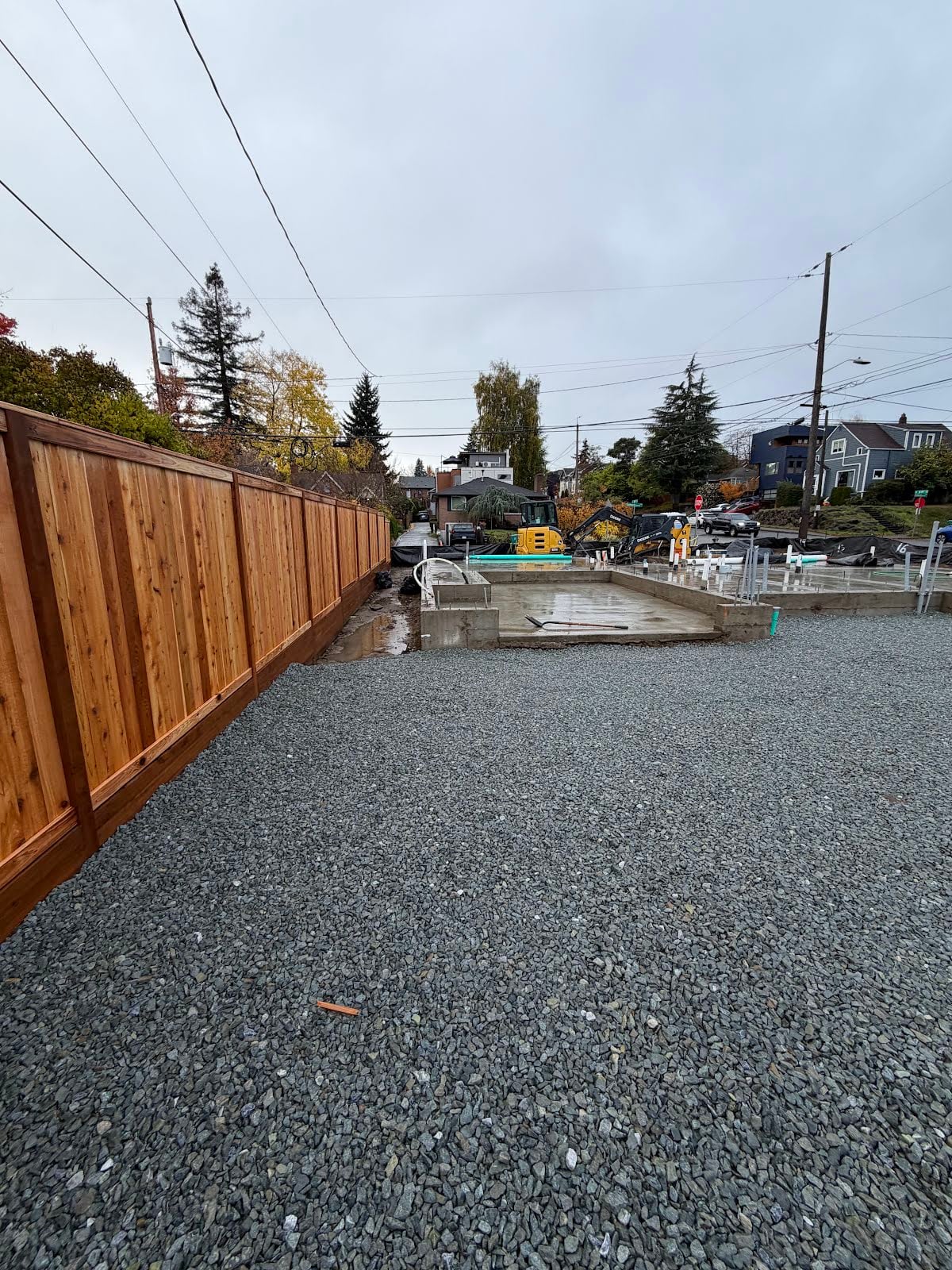
Seattle soil changes fast. One corner of a lot is soft clay that turns to soup after rain, the other is glacial till hard enough to slow down a full-size machine. Hillside lots add slope stability and access problems on top of that.
We plan the dig around the soil, the slope and the season: which machine fits, where the spoils go, how the walls stay put and how water gets off the site.
What people usually want to know before we start digging.
It mostly comes down to the volume of soil, soil type, access for machines, how far the spoils have to travel and whether shoring is needed. We quote after looking at the site and your plans.
If the excavation is part of your building permit, usually not separately. A standalone grading permit is generally required for more than 500 cubic yards, larger grade changes, or work in steep slope and other critical areas, where the threshold can be as low as 25 cubic yards.
Yes, most sites can be worked year-round with good erosion control. The exception is landslide-prone areas, where grading between November 1 and March 31 needs an approved extension from SDCI.
Clean soil can often be reused for backfill or grading on the same site. The rest goes to approved disposal or reuse sites. Contaminated or unsuitable soil is handled separately.
Yes. Hillside lots need more planning: machine access, temporary slopes, shoring and usually input from a geotechnical engineer. We follow your engineer’s recommendations on site.
Glacial till and buried debris are common in Seattle. If conditions differ from what was expected, we stop, show you what we found and talk through options and cost before continuing.
Yes. We handle foundations and utility connections too, so the excavation is planned around what comes next.
Send us your site plan or a few photos of the lot. We’ll look at access, soil and volume and give you a clear number.