
Asphalt · Sidewalks · Curbs · Driveways
When a project cuts into a street, sidewalk or driveway, we put it back properly. Road restoration in Seattle with a compacted base, clean edges and SDOT standards in the right-of-way.
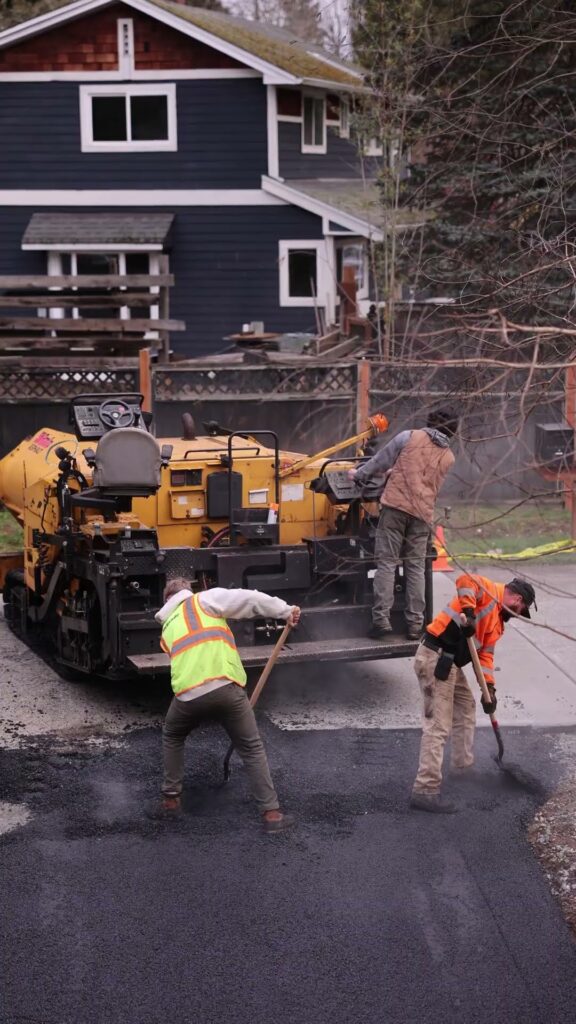
Public streets and private property alike. If excavation or utility work opened it up, we close it up properly.
Utility cuts and trench lines restored with a compacted base, sealed edges and a smooth, level asphalt patch.
Damaged or cut sidewalk replaced as full panels, matched to the surrounding concrete and finish.
Curbs, gutters and curb ramps rebuilt to current standards, including ADA requirements where they apply.
Asphalt and concrete driveways, aprons and approaches restored after excavation or rebuilt as part of a new home.
Gravel roads, access drives and parking areas regraded, recompacted and topped with fresh crushed rock.
Lawns, planting beds and walkways put back after utility work, so the yard doesn’t look like a job site.
Restoring a city street or sidewalk isn’t just a patch job. SDOT’s Right-of-Way Opening and Restoration Rules set the standard, and inspectors check the work.
Concrete is restored in full panels, not partial patches, so joints line up and the surface stays even.
If a new patch would land within 5 feet of an existing one, SDOT requires the full panel to be replaced instead.
A temporary patch can keep a street usable while work continues, but final restoration has to follow on the city’s schedule.
On arterials, work near an intersection can require bringing curb ramps within 25 feet up to current code.
Work in the public right-of-way needs an SDOT permit. We build restoration into the plan from the start, not as an afterthought.
Most failed patches fail from below. We compact backfill and base in lifts before any asphalt or concrete goes down.
Four steps to a surface that holds up and blends in.
We measure the area, check the existing surface and confirm which standards apply.
Clean saw-cut edges and removal of damaged material, out to sound pavement.
Backfill and crushed rock compacted in lifts, so the new surface has something solid underneath.
Asphalt or concrete placed, joints sealed, surface matched, the area cleaned and reopened.
Real street restoration by our crew: paving, rolling and finishing asphalt after utility work.
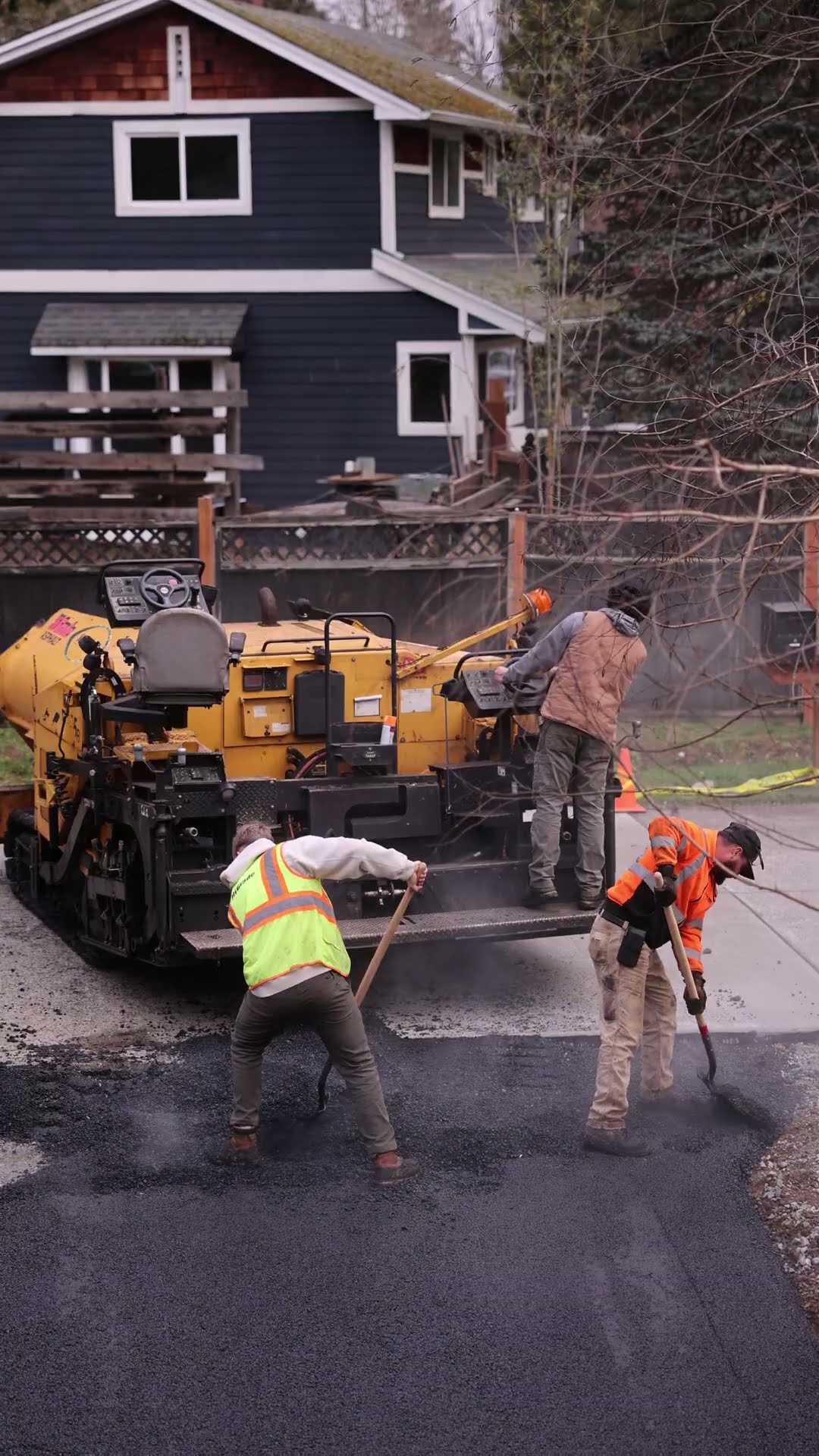
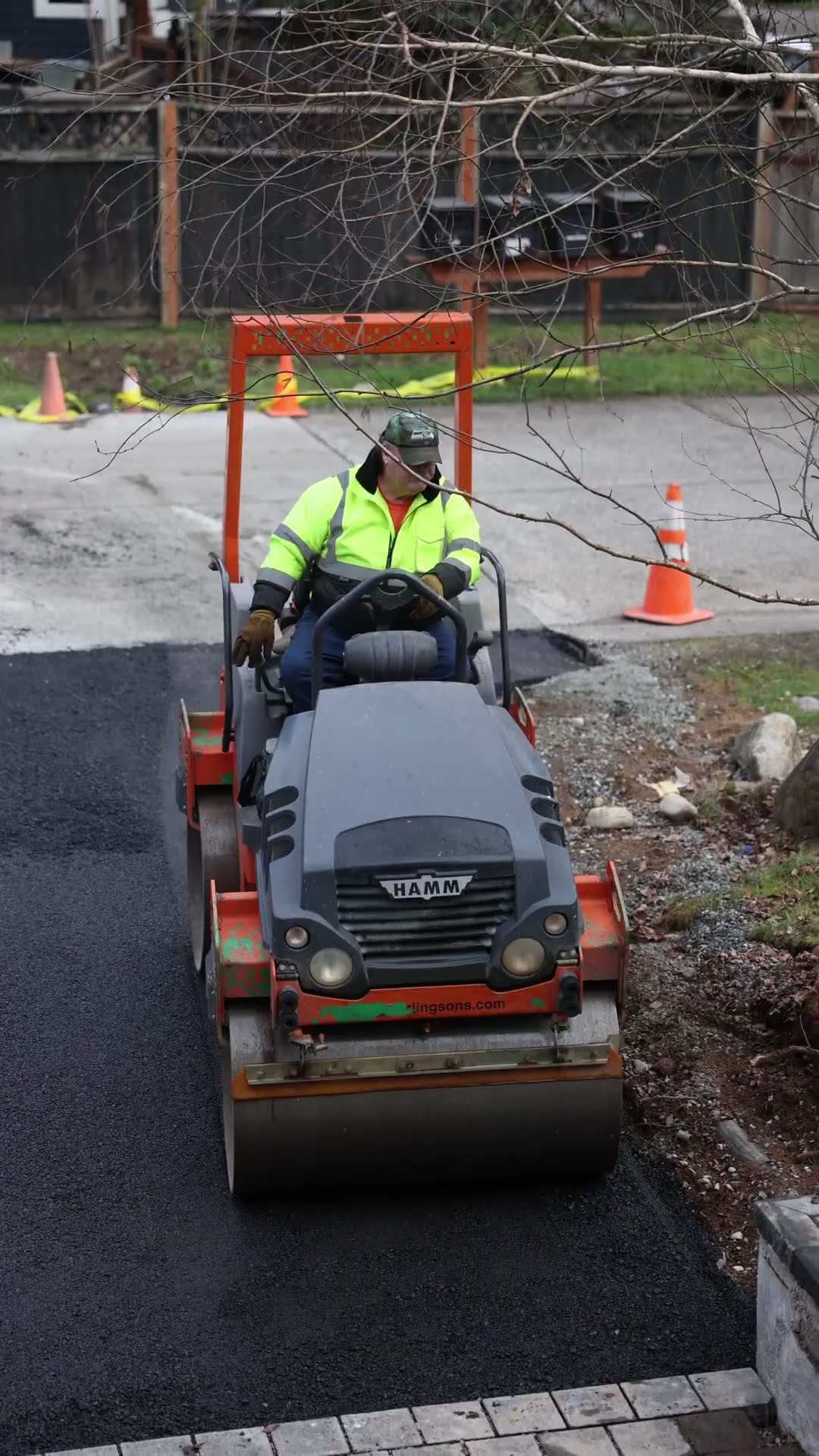
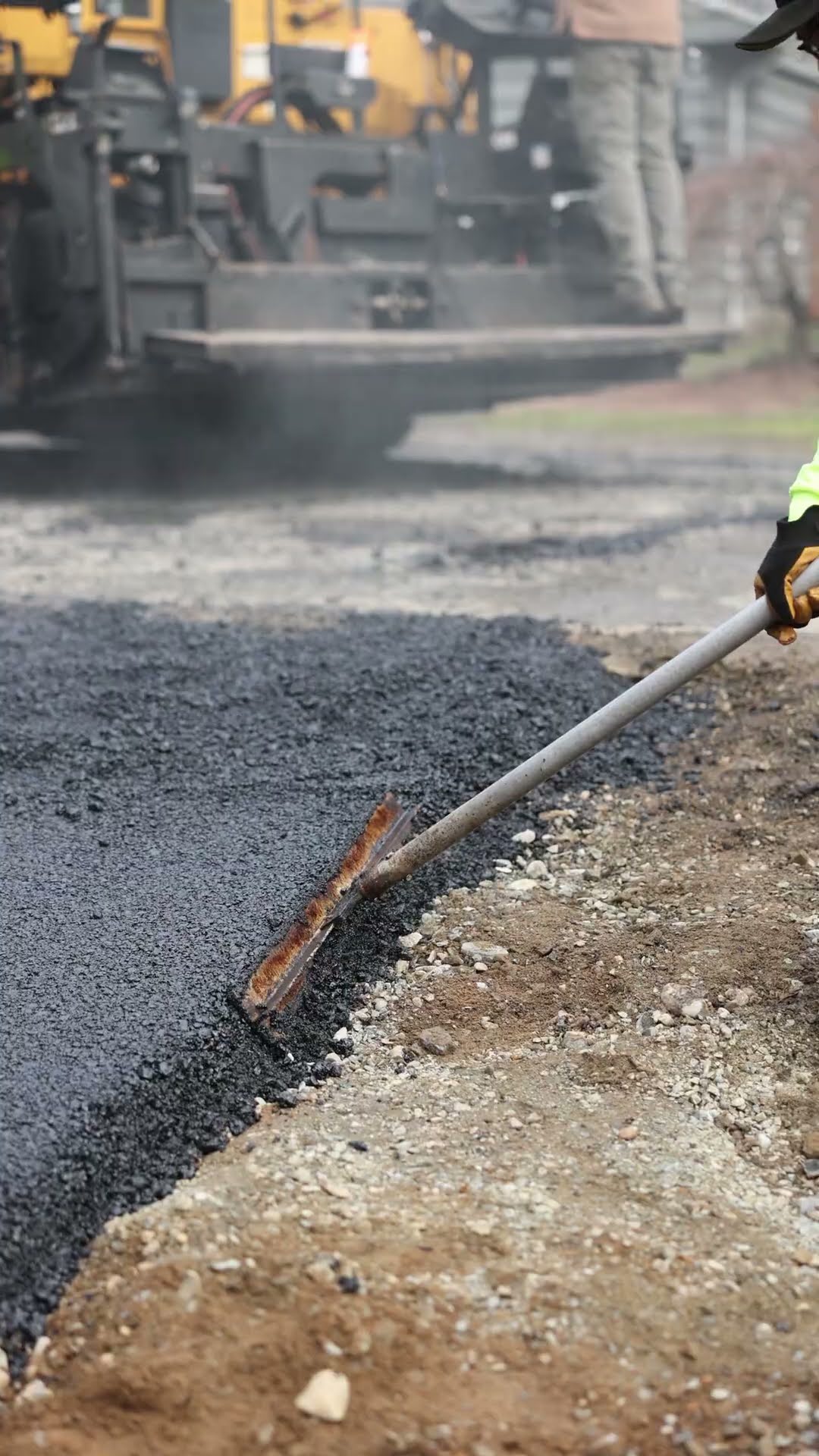
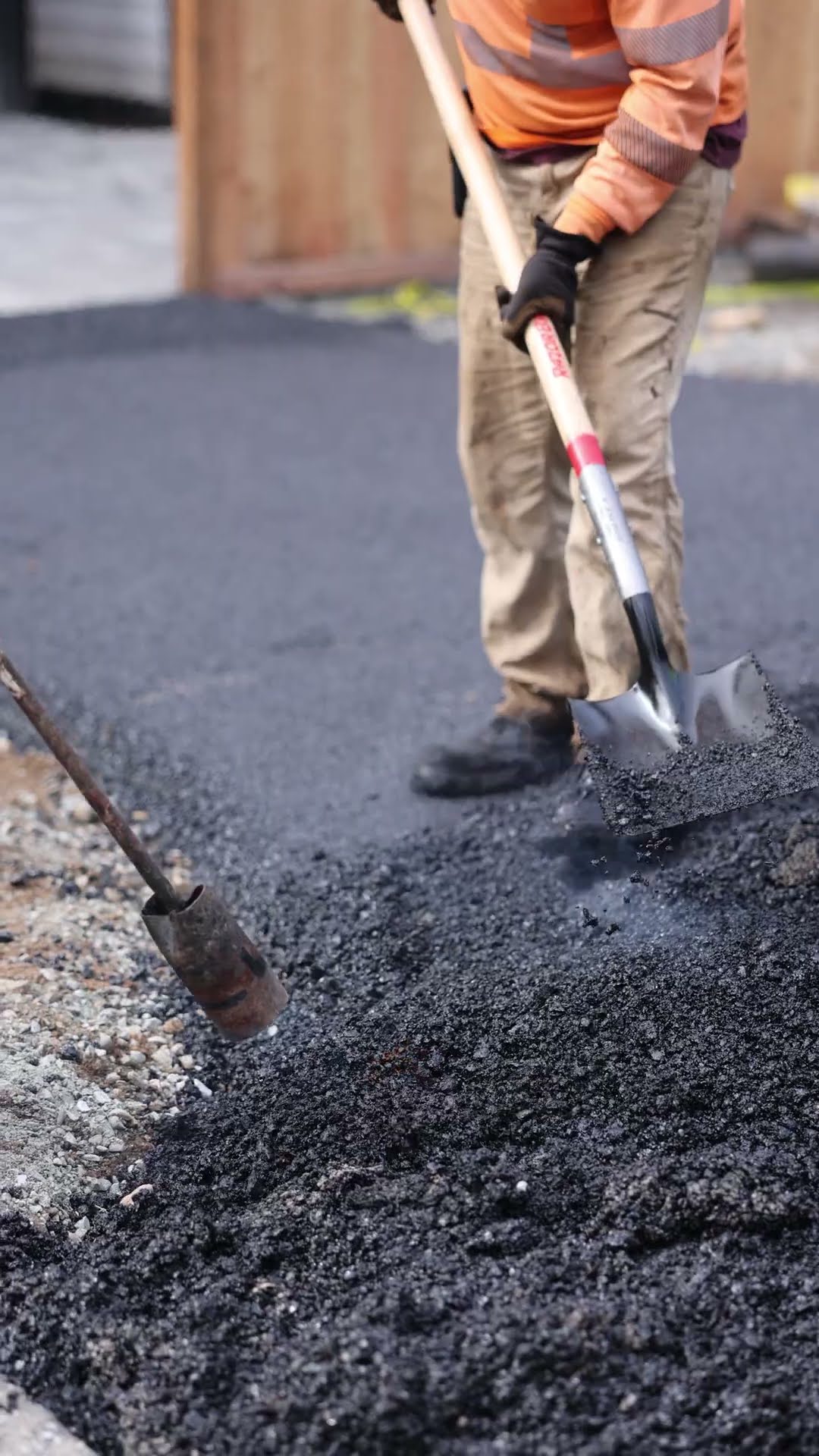
Neighbors never see the pipe or the footing. They see the patch in front of the house, the sidewalk panel and the driveway. If those settle, crack or don’t match, that’s what people remember.
We restore after our own excavation and utility work, so the surface is planned from day one instead of being left for someone else to fix.
What people ask us about patches, panels and driveways.
Whoever opens the right-of-way is responsible for restoring it to SDOT standards. When we do the excavation or utility work, restoration is part of our job.
Seattle’s restoration rules require full panels for concrete, so the sidewalk stays even and the joints line up. A patched corner of a panel tends to crack and settle.
Asphalt can usually take light traffic once it has cooled, often the same day. Concrete needs to cure: a driveway typically needs several days before cars and longer before heavy trucks. We’ll give you exact timing for your job.
Both. Private driveways, access roads, parking areas and gravel drives are a big part of what we restore.
We match material, finish and color as closely as possible. New concrete is always a bit lighter at first and blends in as it weathers.
A temporary patch keeps a street usable while work continues or materials cure. Final restoration is the permanent surface built to the city’s standards.
Asphalt and concrete both depend on temperature and rain. In cold or very wet weather we may put down a temporary surface and finish the final restoration when conditions allow.
Send us the address and a few photos. We’ll look at what needs restoring and give you a clear quote.