
Home / Service Areas / Seattle
Seattle, WA · Local Crew
Teardowns, site prep, utility connections and foundations from Ballard to West Seattle. A local Seattle excavation and demolition contractor that knows the city’s permits, slopes and soil.
Six services that cover a Seattle project from the first permit to the last sidewalk panel. Here’s how each one plays out on a job site in the city.
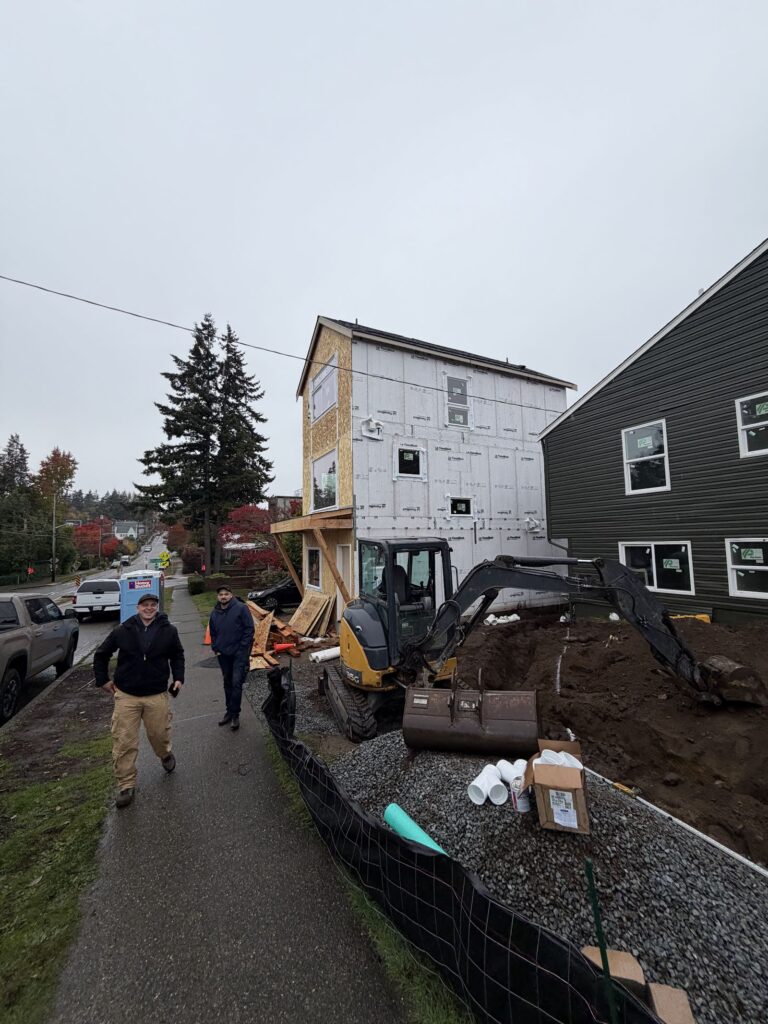
A Seattle teardown needs an asbestos survey, a 10-day Puget Sound Clean Air notice, a capped side sewer and utility shutoffs first. We line it up with builders and walk homeowners through the calls they need to make.
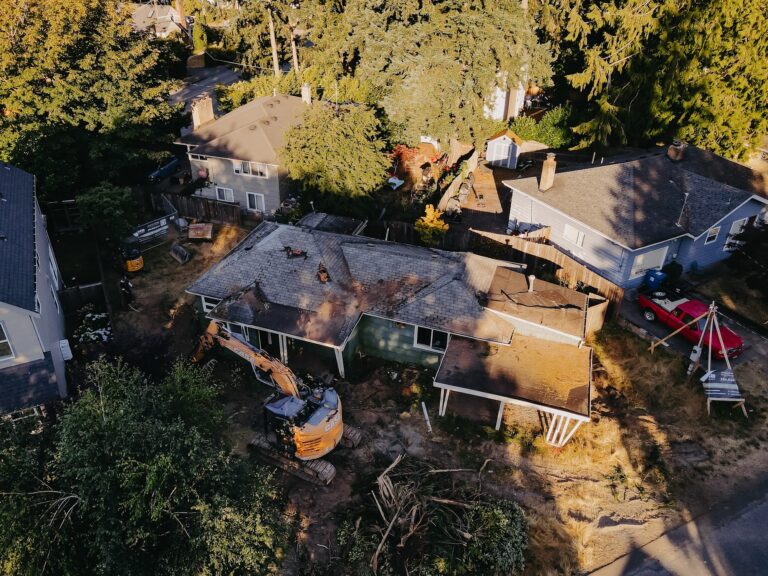
Older houses and garages on tight Seattle lots, often a few feet from the neighbor’s fence. We take them down completely, sort the debris and leave a lot ready for a new home or a middle housing project.
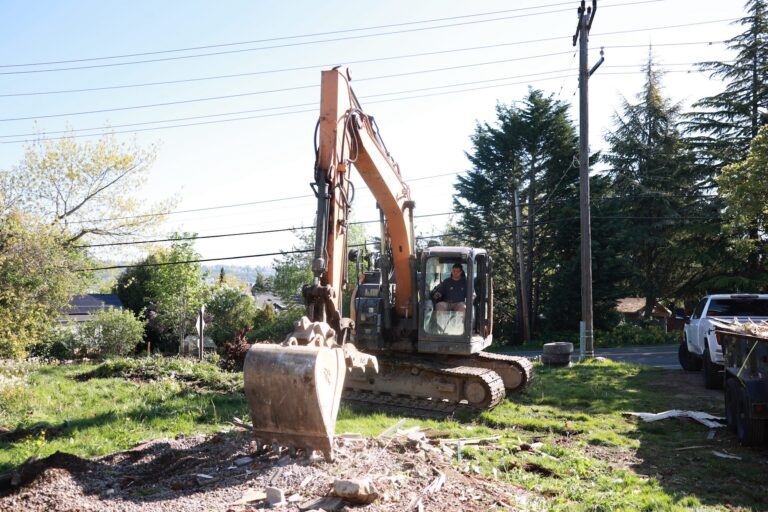
Basements, foundation digs and grading in glacial till and wet clay, including hillside lots the city maps as critical areas. Cuts checked against your plans and spoils hauled off the site.
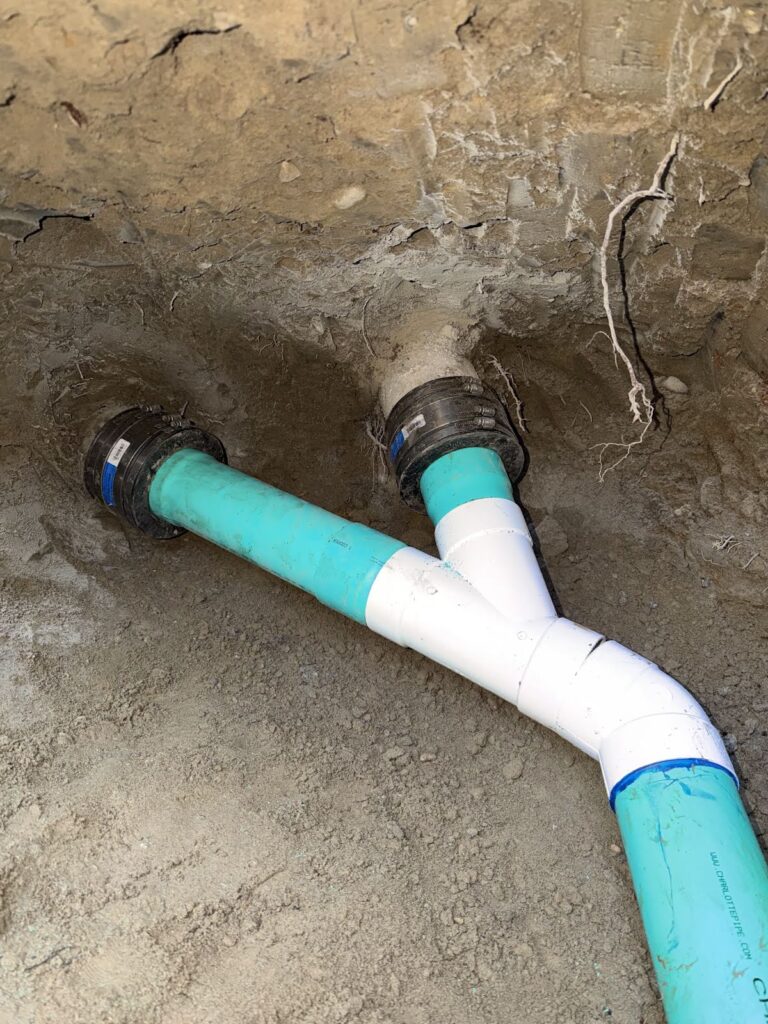
New side sewers, water services and storm drains, plus replacing the old clay lines many Seattle houses still have. SDCI permit, inspection and street restoration are part of the job.
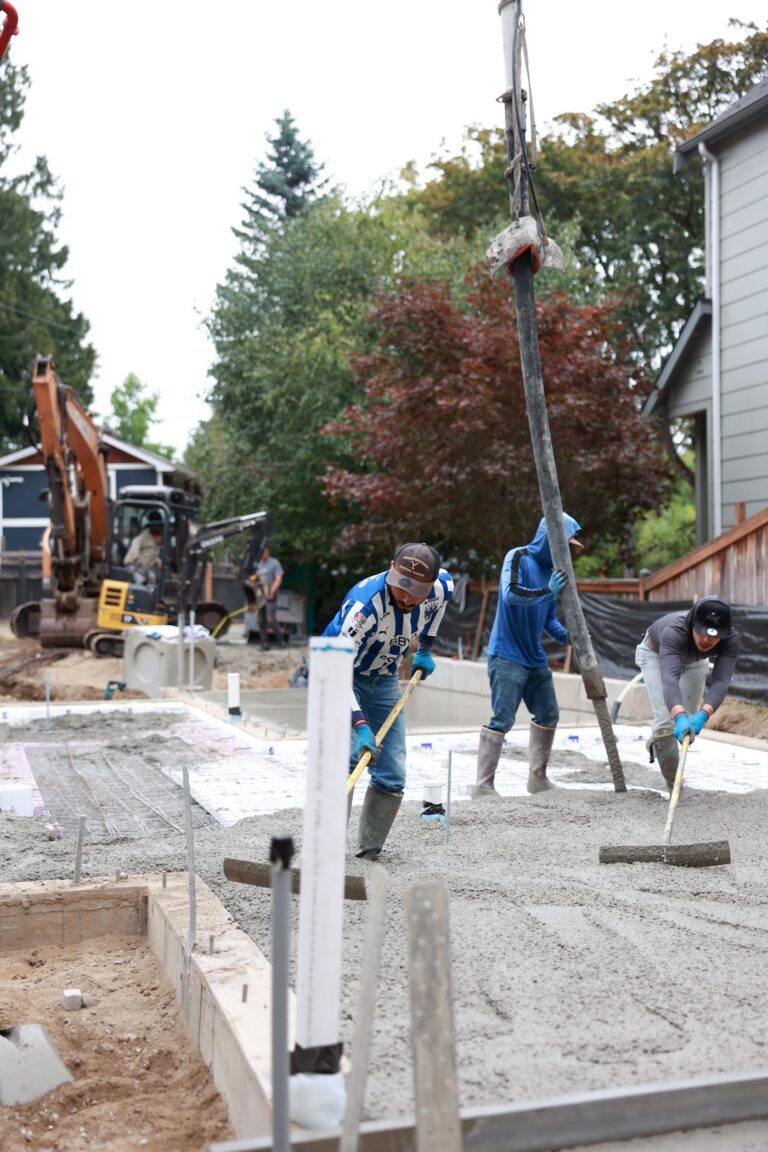
Footings, stem walls and slabs for new homes, additions and backyard ADUs, including mono pours for smaller footprints. Built to plan and ready for the city’s pre-pour inspection.
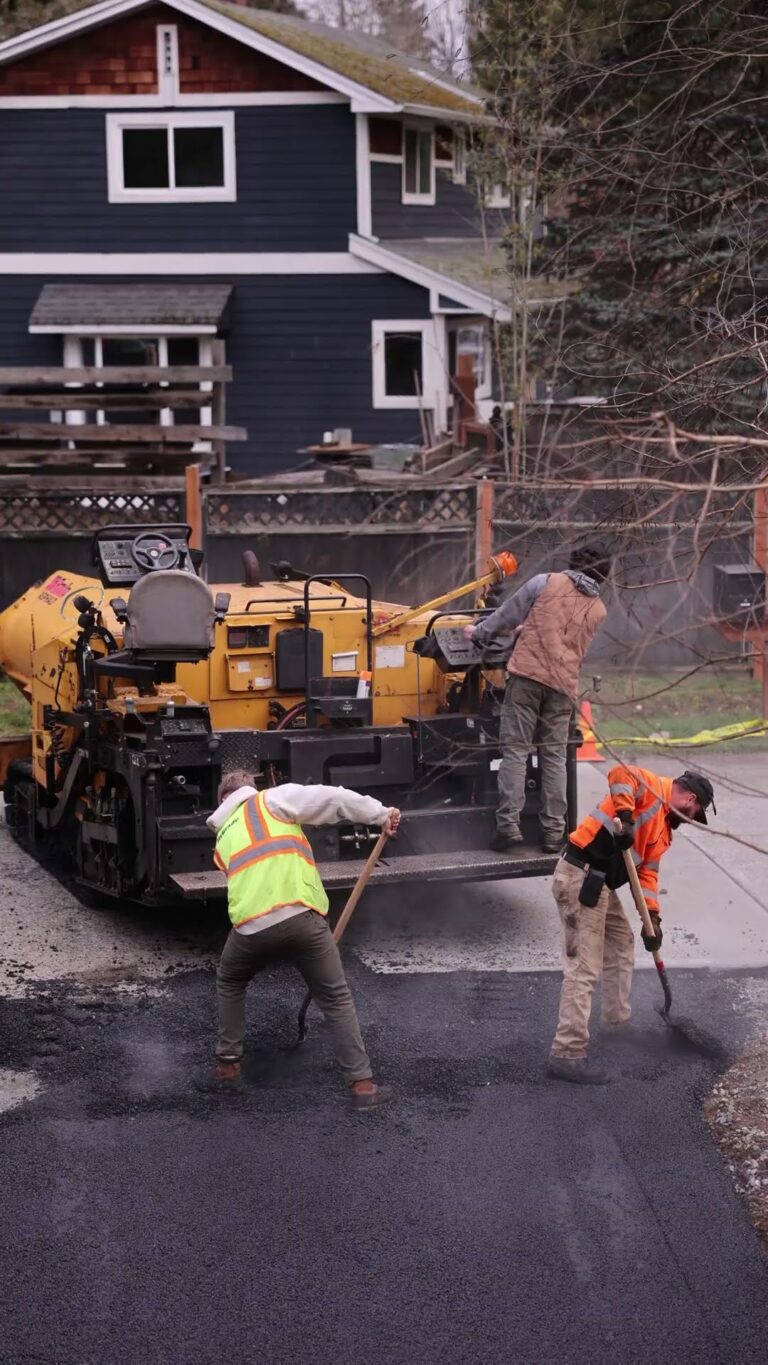
Asphalt patches, sidewalk panels and driveways put back after utility work, built to SDOT’s restoration rules whenever the cut is in the public right-of-way.
These are the things that slow Seattle projects down most often, and what we do so they don’t slow down yours.
The problem
How we handle it
The asbestos survey, 10-day notice, sewer cap and utility shutoffs each run on their own clock. We start the whole list on day one, so the machine shows up when it’s supposed to.
Many Seattle lots leave a few feet between houses and nowhere to park a truck. We size the machine to the lot, plan staging and protect the neighbor’s fence, driveway and foundation.
Slide-prone areas have grading limits from November 1 to March 31, and wet clay changes fast after rain. We plan the dig around the slope, the soil and the calendar.
Old clay side sewers, buried debris and unmarked lines are common in older neighborhoods. We call 811, check what’s there early and talk through options before costs grow.
Seattle’s tree rules start at 6 inches in diameter. We fence the protection zones shown on your plans and keep tracks and spoils out of them.
Demolition, excavation, utilities, foundation and restoration usually mean five different contractors. With us it’s one crew and one schedule.
Since June 30, 2025, most Neighborhood Residential lots can hold more homes, so old single houses are turning into teardowns for townhomes, cottages and ADUs. These numbers shape almost every one of those projects.
Seattle covers about 84 square miles of hills, ravines and old tidelands between Puget Sound and Lake Washington, and is home to roughly 816,600 people as of 2025. Many of the houses in neighborhoods like Ballard, Wallingford and Beacon Hill were built in the early 1900s, which is why so many lots now come with aging foundations, clay sewer lines and narrow side yards.
The city keeps growing, and more and more of that growth happens on the same small lots: an old house comes down and townhomes, cottages or ADUs go up in its place. Every one of those projects starts with demolition, excavation, utilities and a new foundation, which is exactly the work our crew handles.
Four in most zones, six near major transit or with affordable units.
Where storm and sanitary share a pipe, drainage design matters even more.
Hillside lots often need a geotechnical engineer and extra planning.
Slide areas need an approved extension to grade from Nov 1 to Mar 31.
Trunk diameter at which Seattle starts regulating trees, stricter for big ones.
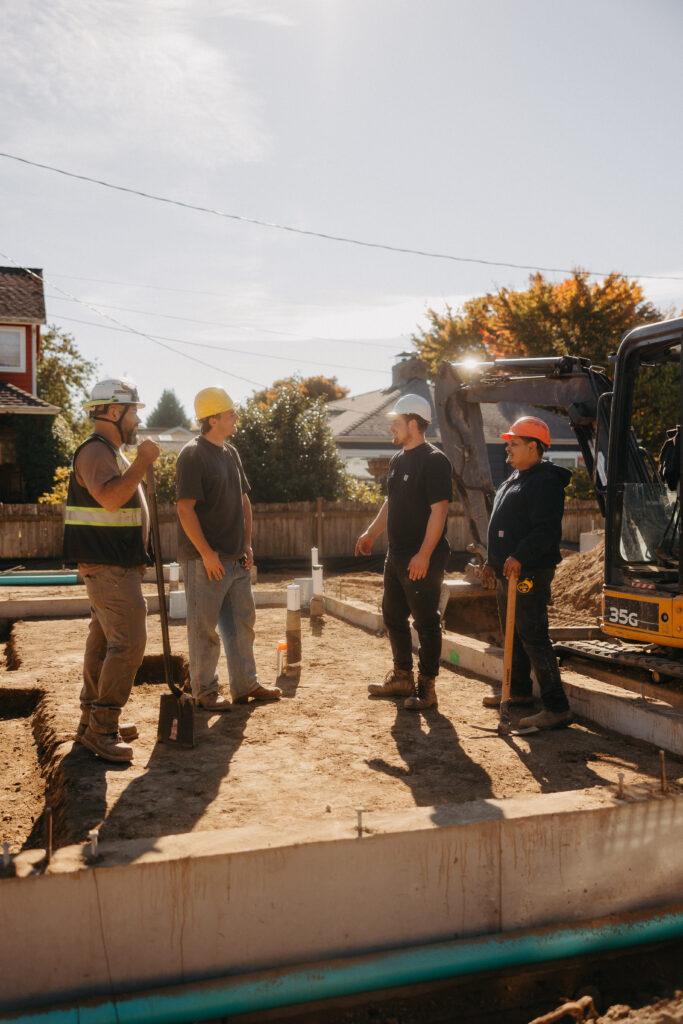
We’re based on S Cloverdale St in South Seattle, so getting a machine to Ballard, Capitol Hill or West Seattle isn’t a day trip. The people who quote your job are the same people who show up to do it.
Because we handle demolition, excavation, utilities, foundations and restoration, a Seattle teardown-to-foundation project can stay with one crew and one schedule.
Questions we hear from Seattle homeowners and builders before a project starts.
Yes, from Northgate and Lake City to West Seattle and Rainier Beach. We’re based in South Seattle, so most neighborhoods are a short drive for our crew and equipment.
Plan on at least a couple of weeks. The asbestos notification alone carries a 10-day wait, and utility shutoffs and sewer capping run on their own timelines. The demolition itself usually takes only a few days. More on our pre-demolition services.
In most Neighborhood Residential zones Seattle now allows four units per lot, and six near major transit or with affordable units. Your designer or permit consultant confirms what fits your lot; we handle the demolition, excavation, utilities and foundation for it.
Many older homes still have clay side sewers that crack and fill with roots. A new house or added units usually means a new or upgraded connection under an SDCI side sewer permit. A sewer scope of the existing line shows where you stand. See our utility connections page.
Yes. Hillside lots in places like Queen Anne, Magnolia or West Seattle need more planning and often a geotechnical engineer, and slide-prone areas have grading limits from November 1 to March 31. We plan the dig around both.
Seattle regulates trees 6 inches and larger in diameter, with stricter rules for big trees. Your plans show which trees stay and their protection zones; we fence those zones and keep equipment out of them.
Whoever opens the right-of-way restores it to SDOT standards. When we do the utility work, road restoration is part of our job.
We are based in the Greater Seattle area and are ready to promptly deliver heavy machinery to your site. Our service area covers Seattle, Bellevue, Redmond, Kirkland, Renton, Tacoma, Lynnwood and Everett, along with the communities in between.
Tell us the address and what you’re building. We’ll come out, look at the lot and give you a straight estimate.